
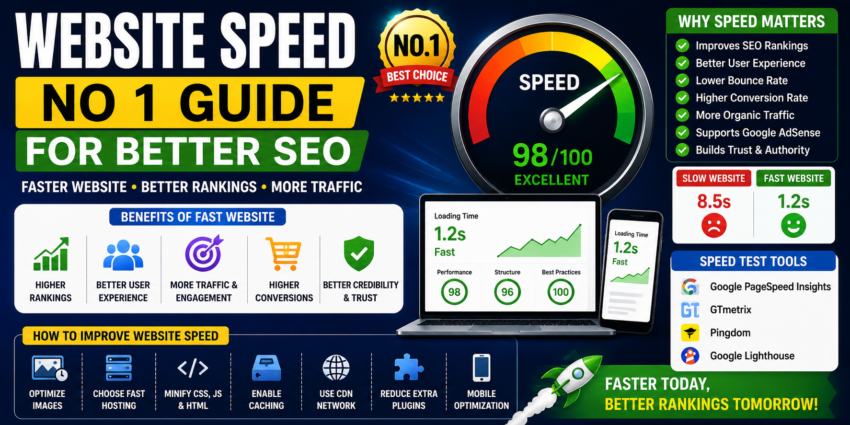
Website speed is one of the most important factors for online success. In today’s digital world, internet users expect websites to load quickly on both desktop and mobile devices. If a website takes too long to load, visitors often leave before even viewing the content. Slow websites can reduce traffic, lower search engine rankings, decrease conversions, and negatively affect user experience.
Search engines like Google also consider website speed as an important ranking factor. Faster websites usually perform better in search results because they provide better experiences for users. For bloggers, businesses, affiliate marketers, and website owners who want long-term success and Google AdSense approval, improving website speed is extremely important.
In this article, you will learn what website speed is, why it matters, factors that affect loading performance, how to improve speed, common mistakes, and how fast websites help SEO and Google AdSense approval.
What Is Website Speed?
Website speed refers to how quickly a website loads and becomes usable for visitors. It measures how fast web pages display content, images, buttons, and other elements after a user clicks a link.
Website speed is often measured in seconds. A fast website usually loads within two or three seconds. Websites that take longer may lose visitors quickly.
Several elements influence website speed, including:
- Hosting quality
- Image size
- Website design
- Code optimization
- Server response time
- Plugins and scripts
Why Website Speed Is Important
Website speed affects both users and search engines. A slow website can damage online performance in many ways.
1. Better User Experience
Visitors prefer websites that load quickly. Faster loading improves browsing experience and user satisfaction.
2. Higher Search Engine Rankings
Google uses website speed as a ranking factor. Faster websites often rank higher in search results.
3. Lower Bounce Rate
Visitors usually leave slow websites quickly. Fast websites reduce bounce rates and improve engagement.
4. Increased Conversions
E-commerce websites and affiliate sites often generate more sales when pages load faster.
5. Better Mobile Performance
Mobile users expect smooth and fast browsing experiences.
How Website Speed Affects SEO
Search engine optimization depends heavily on user experience and technical performance. Website speed directly influences SEO in several ways.
Faster Crawling and Indexing
Search engines can crawl fast websites more efficiently.
Better User Signals
Visitors stay longer on fast websites, which sends positive engagement signals to Google.
Improved Mobile SEO
Mobile-friendly and fast-loading pages rank better in mobile search results.
Higher Organic Traffic
Better rankings usually lead to more organic visitors.
Website Speed and Google AdSense Approval
Many beginners focus only on publishing articles before applying for Google AdSense. However, website performance is also important.
Google prefers websites that provide good user experiences.
Professional Website Quality
Fast websites appear more trustworthy and professional.
Better Visitor Engagement
Visitors spend more time on responsive websites.
Reduced User Frustration
Slow websites create poor user experiences.
Better Mobile Experience
Mobile optimization is extremely important for AdSense approval.
Factors That Affect Website Speed
Many technical factors influence website performance.
Web Hosting Quality
Hosting is one of the biggest speed factors.
Cheap or overloaded hosting servers often cause slow loading times.
Good Hosting Benefits
- Faster server response
- Better stability
- Improved uptime
- Higher performance
Reliable hosting providers improve website speed significantly.
Image Optimization
Large image files slow down websites dramatically.
Common Image Problems
- Oversized dimensions
- Uncompressed files
- Poor image formats
Best Practices
- Compress images
- Use modern formats like WebP
- Resize images properly
Optimized images improve loading speed without reducing quality.
Too Many Plugins
Using excessive plugins can slow websites, especially on WordPress platforms.
Plugin Problems
- Extra scripts
- Database overload
- Security risks
Recommendations
- Remove unnecessary plugins
- Use lightweight alternatives
- Keep plugins updated
Heavy Website Themes
Complicated themes with animations and unnecessary features often reduce performance.
Fast Theme Benefits
- Cleaner code
- Faster loading
- Better mobile responsiveness
Minimal and optimized themes usually perform better.
Unoptimized Code
Large CSS, JavaScript, and HTML files increase loading time.
Optimization Methods
- Minify code
- Remove unused scripts
- Combine CSS files
Cleaner code improves website efficiency.
Lack of Caching
Caching stores website data temporarily, allowing pages to load faster for returning visitors.
Benefits of Caching
- Faster loading
- Reduced server load
- Better user experience
Caching plugins can significantly improve performance.
Content Delivery Networks (CDN)
A CDN stores website files across multiple global servers.
CDN Benefits
- Faster international loading
- Reduced server pressure
- Improved reliability
Popular websites often use CDNs for better speed.
Mobile Optimization and Speed
Most internet users browse websites through smartphones.
A slow mobile website can hurt rankings and traffic significantly.
Mobile Speed Improvements
- Use responsive design
- Compress mobile images
- Avoid large pop-ups
- Reduce unnecessary animations
Mobile optimization is essential for modern SEO.
How to Test Website Speed
Several free tools help analyze website performance.
Google PageSpeed Insights
Google PageSpeed Insights analyzes website speed and provides optimization suggestions.
GTmetrix
GTmetrix offers detailed speed reports and performance analysis.
Pingdom
Pingdom tests loading times from different locations.
Lighthouse
Lighthouse evaluates speed, accessibility, and SEO performance.
Regular testing helps identify website problems.
Best Practices for Improving Website Speed
Use Fast Hosting
Choose reliable hosting providers with good performance.
Compress Images
Reduce image file sizes without lowering quality.
Enable Browser Caching
Caching improves repeat visitor performance.
Minify CSS and JavaScript
Smaller code files load faster.
Use Lightweight Themes
Avoid themes with excessive animations and features.
Reduce Redirects
Too many redirects slow loading speed.
Optimize Databases
Clean unused database files regularly.
Use Lazy Loading
Lazy loading delays image loading until users scroll down.
Website Speed and User Experience
User experience is directly connected to website speed.
Visitors expect instant access to information. Slow websites often frustrate users and reduce trust.
Good User Experience Benefits
- Longer visit duration
- More page views
- Better engagement
- Increased conversions
Search engines prioritize websites that satisfy users.
Common Website Speed Mistakes
Uploading Large Images
Uncompressed images are one of the biggest speed problems.
Using Too Many Ads
Excessive advertisements slow websites and hurt user experience.
Ignoring Mobile Optimization
Mobile users should receive fast browsing experiences.
Choosing Cheap Hosting
Low-quality hosting often causes slow loading and downtime.
Not Updating Software
Outdated themes and plugins may reduce performance and security.
Importance of Core Web Vitals
Core Web Vitals are performance metrics introduced by Google.
They focus on:
- Loading speed
- Visual stability
- Interactivity
Important Metrics
- Largest Contentful Paint (LCP)
- First Input Delay (FID)
- Cumulative Layout Shift (CLS)
Improving these metrics helps SEO and user experience.
Website Speed for Bloggers
Bloggers benefit greatly from fast websites.
Benefits Include
- Better SEO rankings
- Increased reader engagement
- Higher AdSense earnings
- More returning visitors
Fast-loading blogs often perform better overall.
Website Speed for Affiliate Marketing
Affiliate marketers rely heavily on user trust and conversions.
Fast Affiliate Websites Help
- Increase product clicks
- Improve conversion rates
- Reduce bounce rates
- Improve SEO performance
Speed optimization can directly affect affiliate income.
Future of Website Speed Optimization
Website performance continues becoming more important.
Future trends may include:
- Faster web technologies
- AI-powered optimization
- Improved mobile networks
- Better browser performance
- Advanced caching systems
Websites that prioritize speed will likely continue ranking better.
Tips for Long-Term Speed Optimization
Monitor Performance Regularly
Speed optimization is an ongoing process.
Keep Software Updated
Update plugins, themes, and CMS systems regularly.
Focus on Mobile Users
Mobile traffic continues increasing worldwide.
Avoid Unnecessary Features
Simple websites often perform better.
Optimize Every New Content Upload
Compress images and review page performance regularly.
Conclusion
Website speed is one of the most important factors for SEO, user experience, and online success. Fast websites provide better browsing experiences, improve search engine rankings, increase engagement, and support Google AdSense approval.
From hosting quality and image optimization to caching and mobile responsiveness, many factors influence website speed. Website owners who focus on performance optimization often achieve better long-term growth and higher traffic.
For bloggers, affiliate marketers, businesses, and content creators who want professional websites and improved search visibility, investing time in website speed optimization is extremely valuable.
Combined with high-quality content, proper SEO practices, and mobile-friendly design, a fast website can become a powerful foundation for long-term online success.