
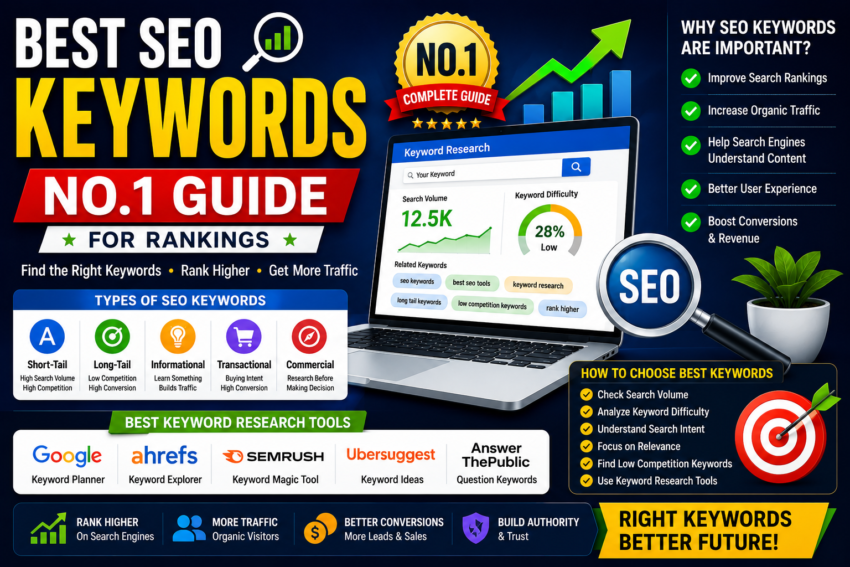
Best SEO Keywords Search engine optimization is one of the most effective ways to grow a website naturally. Every successful SEO strategy starts with one important element: keywords. Without the right keywords, even high-quality content may fail to attract visitors from search engines like Google.
SEO keywords help search engines understand website content and connect users with relevant information. Choosing the best SEO keywords can improve rankings, increase organic traffic, boost user engagement, and support long-term website growth.
For bloggers, businesses, affiliate marketers, and beginners who want better rankings and Google AdSense approval, understanding SEO keywords is extremely important. In this article, you will learn what SEO keywords are, why they matter, types of keywords, how to find the best keywords, and how to use them properly.
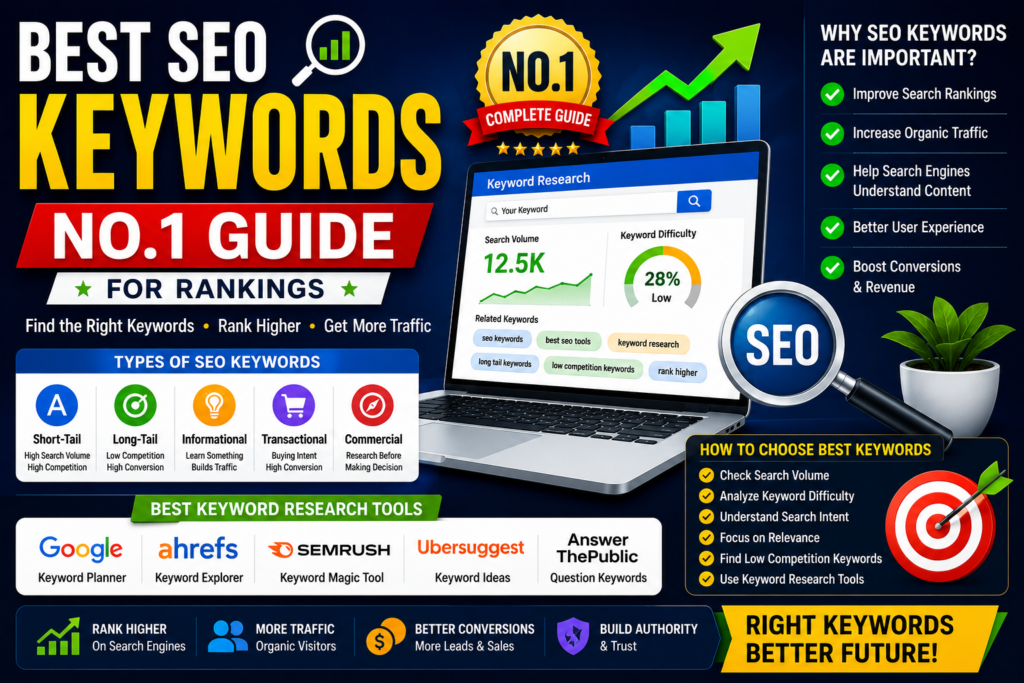
What Are SEO Keywords?
SEO keywords are words or phrases that users type into search engines when looking for information online.
For example:
- Best SEO tools
- WordPress SEO plugins
- How to improve website speed
- Best affiliate marketing tips
These search phrases help search engines match websites with user searches.
In simple words, SEO keywords connect websites to search engine users.
Why SEO Keywords Are Important
Keywords are the foundation of search engine optimization.
1. Improve Search Rankings
Optimized keywords help websites rank higher in search results.
2. Increase Organic Traffic
Targeted keywords attract visitors naturally from search engines.
3. Help Search Engines Understand Content
Keywords explain what a webpage is about.
4. Improve User Experience
Relevant content satisfies user search intent.
5. Support Business Growth
More targeted traffic can increase conversions and revenue. Best SEO Keywords for Blogs, Best SEO Keywords for Affiliate Marketing, Best SEO Keywords for Google Ranking, Best SEO Keywords for Websites, Best SEO Keywords for WordPress.
Types of SEO Keywords
There are several types of SEO keywords used in digital marketing.
Short-Tail Keywords
Short-tail keywords are broad search terms with one or two words.
Examples
- SEO
- Hosting
- Blogging
Benefits
- High search volume
- Large audience reach
Disadvantages
- Very competitive
- Difficult to rank for
Long-Tail Keywords
Long-tail keywords are more specific phrases.
Examples
- Best free SEO tools for beginners
- How to improve website speed for SEO
Benefits
- Lower competition
- Easier rankings
- Better conversion rates
Long-tail keywords are highly valuable for new websites.
Informational Keywords
Users search informational keywords to learn something.
Examples
- What is SEO
- How does affiliate marketing work
These keywords work well for blogs and tutorials.
Transactional Keywords
Transactional keywords show buying intent.
Examples
- Buy web hosting
- Best laptop deals
These keywords often generate higher affiliate conversions.
Navigational Keywords
Users search for specific brands or websites.
Examples
- Google Search Console
- WordPress login
Commercial Keywords
Commercial keywords are used by users researching products or services before purchasing.
Examples
- Best SEO plugins
- Top keyword research tools
These keywords are excellent for affiliate marketing content.
How Search Engines Use Keywords
Search engines analyze keywords to understand webpage topics.
When users search online, search engines compare their keywords with indexed content to deliver the most relevant results.
Search engines also analyze:
- Content quality
- User experience
- Backlinks
- Website authority
- Mobile optimization
Keywords are important, but they work best alongside high-quality content.
Best SEO Keywords for Beginners
Beginners should target low-competition keywords first.
Examples
- Easy SEO tips
- Beginner blogging guide
- Free keyword research tools
These keywords are easier to rank for and help build website authority.
Best SEO Keywords for Blogs
Blog websites perform well with informational and long-tail keywords.
Good Blog Keyword Examples
- How to start a blog
- SEO content writing tips
- Best blogging tools
Helpful content attracts organic traffic over time.
Best SEO Keywords for Affiliate Marketing
Affiliate marketers often target buyer-intent keywords.
Examples
- Best VPN for streaming
- Best hosting for WordPress
- Best AI tools for marketing
These keywords usually convert better because users are closer to making purchases.
Best SEO Keywords for AdSense Websites
Google AdSense websites benefit from keywords with stable search traffic.
Examples
- SEO tutorials
- Technology guides
- Blogging tips
- Website optimization
Informational content often performs well with display advertisements.
Keyword Research and SEO
Keyword research helps identify valuable search terms.
Good keyword research improves:
- Content planning
- SEO strategy
- Traffic growth
- Search visibility
Keyword research is one of the most important SEO skills.
Best Tools for Finding SEO Keywords
Several SEO tools help users discover keyword opportunities.
Google Keyword Planner
Google Keyword Planner provides keyword data directly from Google.
Features
- Search volume
- Keyword suggestions
- Competition analysis
Ahrefs
Ahrefs is one of the most powerful SEO research tools.
Features
- Keyword difficulty
- Competitor analysis
- Backlink analysis
Semrush
Semrush provides advanced SEO and keyword research features.
Ubersuggest
Ubersuggest offers beginner-friendly keyword research tools.
AnswerThePublic
AnswerThePublic helps discover question-based keywords.
How to Choose the Best SEO Keywords
Selecting the right keywords is extremely important.
Consider Search Volume
High-volume keywords attract more traffic.
Check Keyword Competition
Low-competition keywords are easier to rank for.
Understand User Intent
Content should match what users want.
Focus on Relevance
Choose keywords related to your niche.
Analyze Trends
Trending keywords can generate fast traffic growth.
Search Intent and Keyword Optimization
Understanding search intent improves SEO success.
Types of Search Intent
- Informational
- Commercial
- Transactional
- Navigational
Content should satisfy user expectations.
Keyword Placement Best Practices
Using keywords naturally improves SEO.
Important Placement Areas
- Title tags
- Meta descriptions
- Headings
- URL structure
- Introduction paragraphs
- Image alt text
Avoid excessive keyword repetition.
Keyword Stuffing and Why It Is Bad
Keyword stuffing means overusing keywords unnaturally.
Problems Caused
- Poor readability
- Lower rankings
- Bad user experience
Search engines prefer natural and useful content.
Content Quality and SEO Keywords
Keywords alone cannot guarantee rankings.
High-quality content is equally important.
Good Content Should Be
- Helpful
- Original
- Easy to read
- Informative
- Well-structured
Search engines prioritize valuable user experiences.
Internal Linking and Keywords
Internal links connect related pages within a website.
Benefits
- Better navigation
- Improved crawlability
- Increased page authority
- Longer session duration
Anchor text should include relevant keywords naturally.
Mobile SEO and Keywords
Most searches now happen on mobile devices.
Mobile SEO Tips
- Fast loading speed
- Responsive design
- Readable text
- Mobile-friendly navigation
Mobile optimization improves keyword rankings.
Technical SEO and Keyword Rankings
Technical SEO supports keyword performance.
Important Technical Factors
- Website speed
- HTTPS security
- XML sitemaps
- Structured data
- Clean URLs
Technical optimization helps search engines crawl websites efficiently.
Best SEO Keywords for Different Niches
Different industries require different keyword strategies.
Finance
- Best credit cards
- Investment apps
Technology
- Best laptops
- AI tools
Health
- Healthy diet tips
- Fitness exercises
Blogging
- SEO writing tips
- WordPress plugins
Common Keyword Research Mistakes
Many beginners make SEO keyword mistakes.
Targeting Highly Competitive Keywords
New websites may struggle to rank for difficult keywords.
Ignoring Long-Tail Keywords
Long-tail keywords often provide easier ranking opportunities.
Not Understanding Search Intent
Content must match what users expect.
Using Irrelevant Keywords
Irrelevant traffic rarely converts well.
Publishing Thin Content
Low-quality content hurts SEO performance.
SEO Keywords and Google AdSense Approval
Keyword optimization can improve AdSense approval chances indirectly.
Better Website Structure
Optimized content appears more professional.
Improved User Experience
Helpful content increases engagement.
Higher Organic Traffic
Search traffic signals website quality.
Better Content Organization
Keyword-focused articles improve navigation and clarity.
Future of SEO Keywords
SEO continues evolving as search engines become smarter.
Future trends may include:
- AI-powered keyword analysis
- Voice search optimization
- Semantic SEO
- User intent analysis
- Personalized search experiences
Keyword research will remain an important SEO strategy.
Tips for Long-Term SEO Success
Focus on User Value
Helpful content performs best.
Publish Consistently
Regular content improves rankings over time.
Update Old Articles
Refreshing content helps maintain rankings.
Monitor SEO Performance
Track rankings and traffic regularly.
Improve Website Speed
Fast websites improve user experience and SEO.
Conclusion
SEO keywords are one of the most important parts of successful search engine optimization. They help search engines understand website content and connect users with relevant information.
From long-tail keywords and informational searches to buyer-intent phrases and niche-specific terms, choosing the best SEO keywords can improve rankings, increase organic traffic, and support long-term website growth.
For bloggers, businesses, affiliate marketers, and beginners who want better rankings and improved chances of Google AdSense approval, learning proper keyword research and optimization strategies is extremely valuable.
Combined with high-quality content, technical SEO, mobile optimization, and user-focused experiences, strong keyword strategies can help websites achieve lasting online success.