
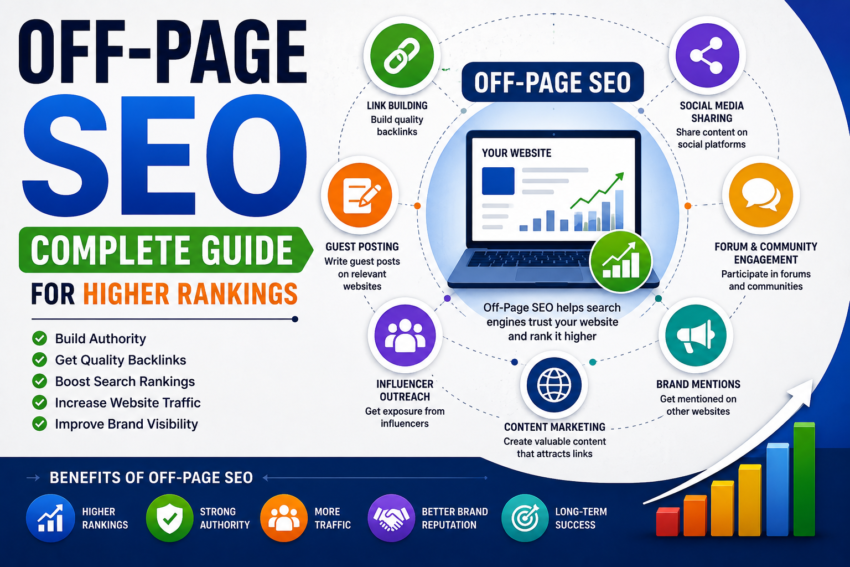
Search engine optimization is one of the most important parts of building a successful website. Most website owners focus heavily on creating content and optimizing their pages, but many forget another essential part of SEO known as Off-Page SEO. Without proper off page optimization, ranking on Google becomes much more difficult, even if your content is excellent.
Off-Page SEO helps search engines understand how trustworthy, valuable, and popular your website is across the internet. It improves website authority, increases backlinks, drives referral traffic, and helps websites rank higher in search results.
For bloggers, affiliate marketers, businesses, and website owners who want long-term growth and Google AdSense approval, understanding Off Page SEO is extremely important. In this article, you will learn what Off Page SEO is, why it matters, important strategies, benefits, common mistakes, and how it helps improve search engine rankings.
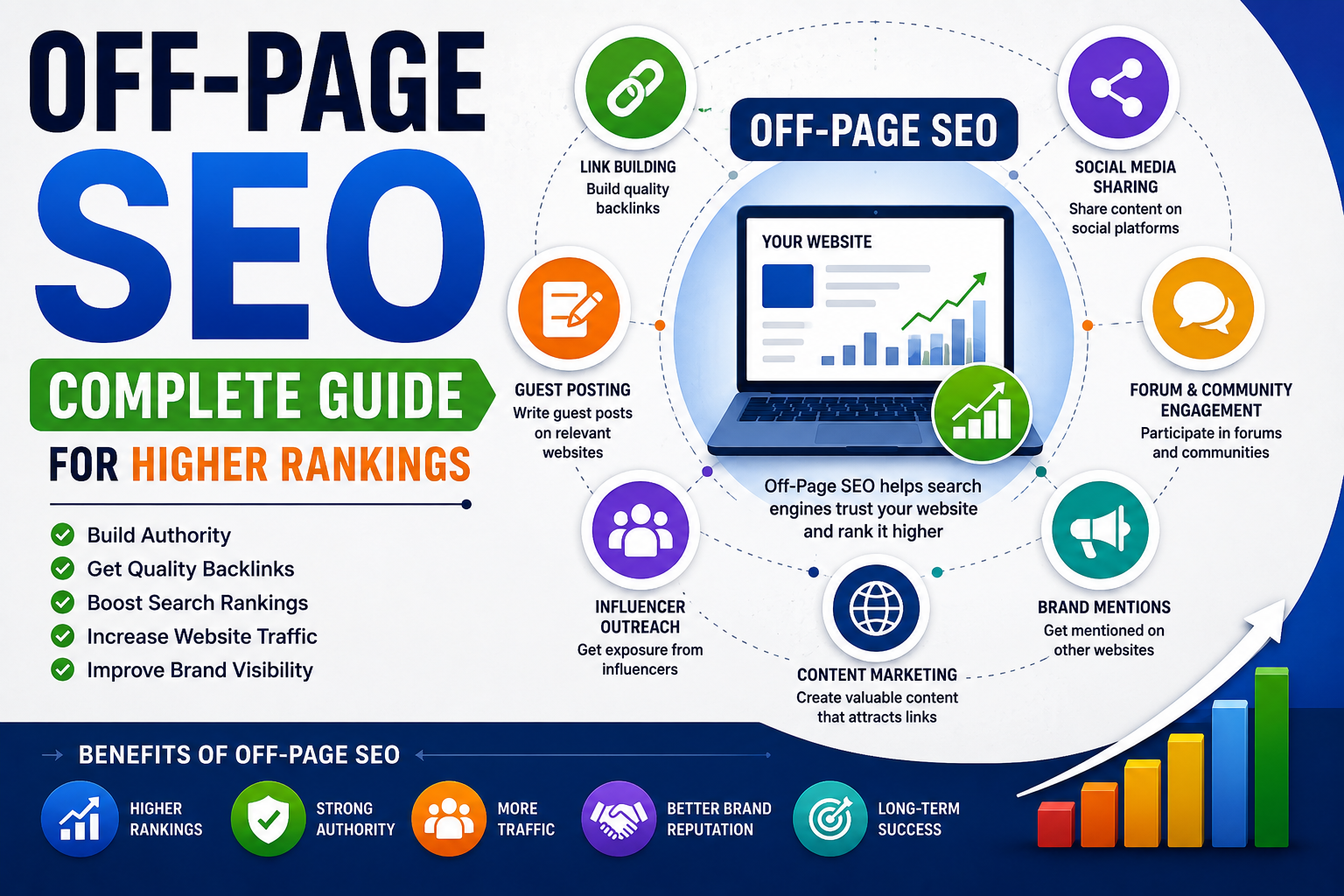
What Is Off-Page SEO?
Off-Page SEO refers to all optimization activities performed outside your website to improve search engine rankings and website authority. Unlike On-Page SEO, which focuses on content and website structure, Off Page SEO focuses on external signals such as backlinks, brand mentions, social sharing, and online reputation.
In simple words, Off Page SEO helps search engines determine how trustworthy and popular your website is on the internet.
The main goal of Off-Page SEO is to increase website authority and credibility through external sources.
Why Is Off-Page SEO Important?
Google uses hundreds of ranking factors to determine search engine rankings. One of the strongest ranking signals is website authority, and Off Page SEO helps improve that authority.
1. Improves Website Rankings
Strong off page signals help websites rank higher in Google search results.
2. Builds Website Authority
When trusted websites link to your content, search engines see your website as more reliable.
3. Increases Organic Traffic
Better rankings lead to more visitors from search engines.
4. Improves Brand Awareness
Off-Page SEO helps people discover your website through multiple online platforms.
5. Helps Google Trust Your Website
A website with quality backlinks and strong online presence appears more trustworthy.
Difference Between On-Page SEO and Off-Page SEO
Many beginners confuse On-Page SEO and Off Page SEO. Both are important, but they focus on different areas.
On-Page SEO
On-Page SEO involves optimization inside the website.
Examples include:
- Keyword optimization
- Meta titles
- Headings
- Content quality
- Internal linking
- Image optimization
Off-Page SEO
Off-Page SEO involves optimization outside the website.
Examples include:
- Backlink building
- Guest posting
- Social media promotion
- Brand mentions
- Influencer outreach
Both strategies work together for better SEO performance.
Backlinks: The Core of Off-Page SEO
Backlinks are the most important part of Off Page SEO.
A backlink is a link from another website pointing to your website. Search engines treat backlinks as votes of confidence.
If high-authority websites link to your content, Google assumes your content is valuable and trustworthy.
Types of Backlinks
DoFollow Backlinks
DoFollow backlinks pass SEO authority from one website to another. These are highly valuable for rankings.
NoFollow Backlinks
NoFollow backlinks do not directly pass authority but can still provide traffic and brand exposure.
High-Quality Backlinks
Links from trusted and relevant websites are considered high-quality.
Low-Quality Backlinks
Spammy or irrelevant backlinks may hurt website rankings.
Best Off-Page SEO Strategies
There are many ways to improve Off Page SEO. Some strategies are more effective than others.
Guest Posting
Guest posting means writing articles for other websites in your niche.
Benefits include:
- Getting quality backlinks
- Increasing authority
- Reaching new audiences
- Building relationships
Guest posting remains one of the most effective Off Page SEO methods.
Social Media Marketing
Social media platforms help websites gain visibility and traffic.
Popular platforms include:
Sharing articles on social media can improve engagement and brand awareness.
Influencer Outreach
Influencers can help promote your website and content to larger audiences.
Benefits include:
- Increased traffic
- More backlinks
- Better online reputation
- Improved trust
Forum Participation
Participating in niche-related forums helps build authority and attract visitors.
Examples include:
- Quora
- Niche communities
However, avoid spammy behavior.
Content Marketing
Creating high-quality content naturally attracts backlinks and social shares.
Popular content types include:
- Tutorials
- Guides
- Infographics
- Research articles
- Case studies
Valuable content performs better in search engines.
Directory Submission
Submitting your website to trusted directories can help improve visibility.
However, avoid low-quality directories because they may harm SEO.
Brand Mentions
Even when websites mention your brand without linking, search engines may still recognize the signal.
Positive brand mentions help improve credibility.
Broken Link Building
This strategy involves finding broken links on other websites and suggesting your content as a replacement.
It helps both website owners and SEO performance.
Off-Page SEO and Google AdSense Approval
Many website owners apply for AdSense without building website authority. Off Page SEO helps websites appear more professional and trustworthy.
Better Website Trust
Websites with strong backlinks appear more reliable to Google.
Improved Organic Traffic
AdSense-friendly websites usually have stable traffic sources.
Better Content Visibility
Off-Page SEO helps content reach larger audiences.
Stronger Online Presence
Websites with social signals and backlinks often perform better.
Benefits of Off-Page SEO
Higher Search Engine Rankings
Strong off page signals help websites move higher in search results.
Increased Website Authority
Quality backlinks improve domain authority.
More Referral Traffic
Visitors can come from backlinks, social media, and external websites.
Faster Indexing
Search engines discover linked pages more quickly.
Long-Term SEO Growth
Off-Page SEO provides long-lasting SEO benefits.
Common Off-Page SEO Mistakes
Buying Spammy Backlinks
Low-quality paid backlinks can result in Google penalties.
Overusing Exact Match Anchor Text
Using the same keyword repeatedly in backlinks looks unnatural.
Ignoring Content Quality
Backlinks alone cannot rank poor content.
Using Black Hat SEO
Spam tactics may temporarily improve rankings but can harm websites long term.
Focusing Only on Quantity
A few high-quality backlinks are better than hundreds of low-quality links.
White Hat vs Black Hat Off-Page SEO
White Hat SEO
White Hat SEO follows Google guidelines.
Examples include:
- Quality guest posting
- Natural backlinks
- Valuable content
- Ethical promotion
Black Hat SEO
Black Hat SEO uses manipulative tactics.
Examples include:
- Link farms
- Spam comments
- Paid spam backlinks
- Automated link building
Black Hat SEO can lead to penalties.
How Long Does Off-Page SEO Take?
Off-Page SEO is a long-term strategy. Results usually take time because Google needs to evaluate backlinks and authority signals.
Typical timeline:
- Small improvements: 1–3 months
- Moderate growth: 3–6 months
- Strong authority: 6–12 months
Consistency is very important.
Best Tools for Off-Page SEO
Several SEO tools help analyze backlinks and website authority.
Popular tools include:
- Ahrefs
- SEMrush
- Moz
- Google Search Console
- Ubersuggest
These tools help monitor SEO progress and backlink performance.
Tips for Successful Off-Page SEO
Focus on Quality Content
Good content naturally attracts backlinks.
Build Relationships
Networking with bloggers and website owners helps create opportunities.
Stay Consistent
SEO growth takes time and consistency.
Use Multiple Strategies
Combine guest posting, social media, and content marketing.
Avoid Spam Techniques
Always follow Google guidelines.
Future of Off-Page SEO
Search engines continue improving their algorithms. Modern Off-Page SEO now focuses more on trust, authority, and user experience.
Future trends may include:
- Brand authority signals
- AI-driven ranking systems
- User engagement metrics
- Better spam detection
- Social trust indicators
Quality and authenticity will become even more important.
Conclusion
Off-Page SEO is one of the most important parts of search engine optimization. It helps improve website authority, search engine rankings, organic traffic, and online visibility.
By building quality backlinks, promoting content, improving brand awareness, and following ethical SEO practices, websites can achieve long-term growth and better search engine performance.
For bloggers, affiliate marketers, and website owners who want better Google rankings and higher chances of Google AdSense approval, Off Page SEO is essential. Combined with strong content and proper On-Page SEO, Off-Page SEO can significantly improve website success over time.