
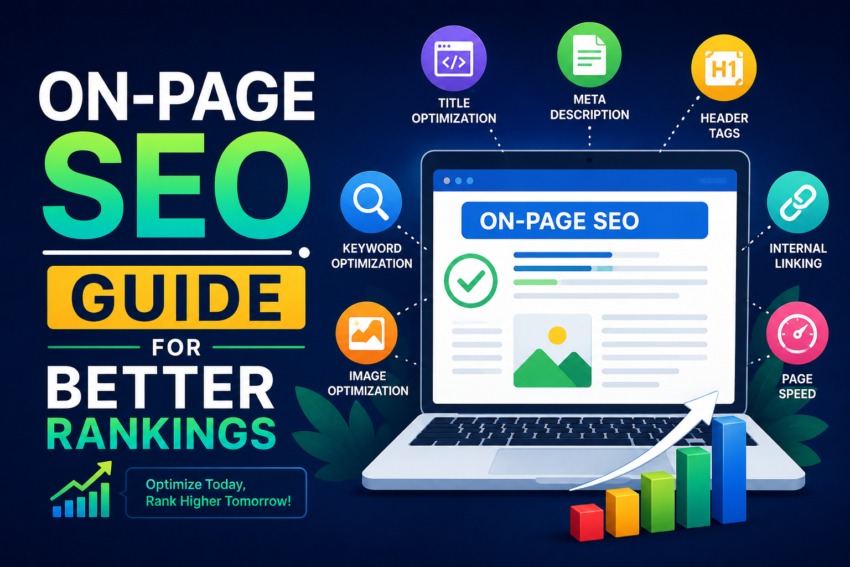
On Page SEO Guide for Better Rankings
In the modern digital world, having a website is not enough to achieve online success. Millions of websites compete for visibility on search engines like Google every day. To stand out from the competition, your website must be properly optimized for search engines. One of the most important parts of search engine optimization is On-Page SEO.
On-Page SEO helps search engines understand your content while also improving the user experience for visitors. Proper on-page optimization can significantly increase organic traffic, improve search rankings, and boost conversions.
In this article, we will explore everything you need to know about On-Page SEO, including its importance, ranking factors, optimization techniques, best practices, and common mistakes to avoid.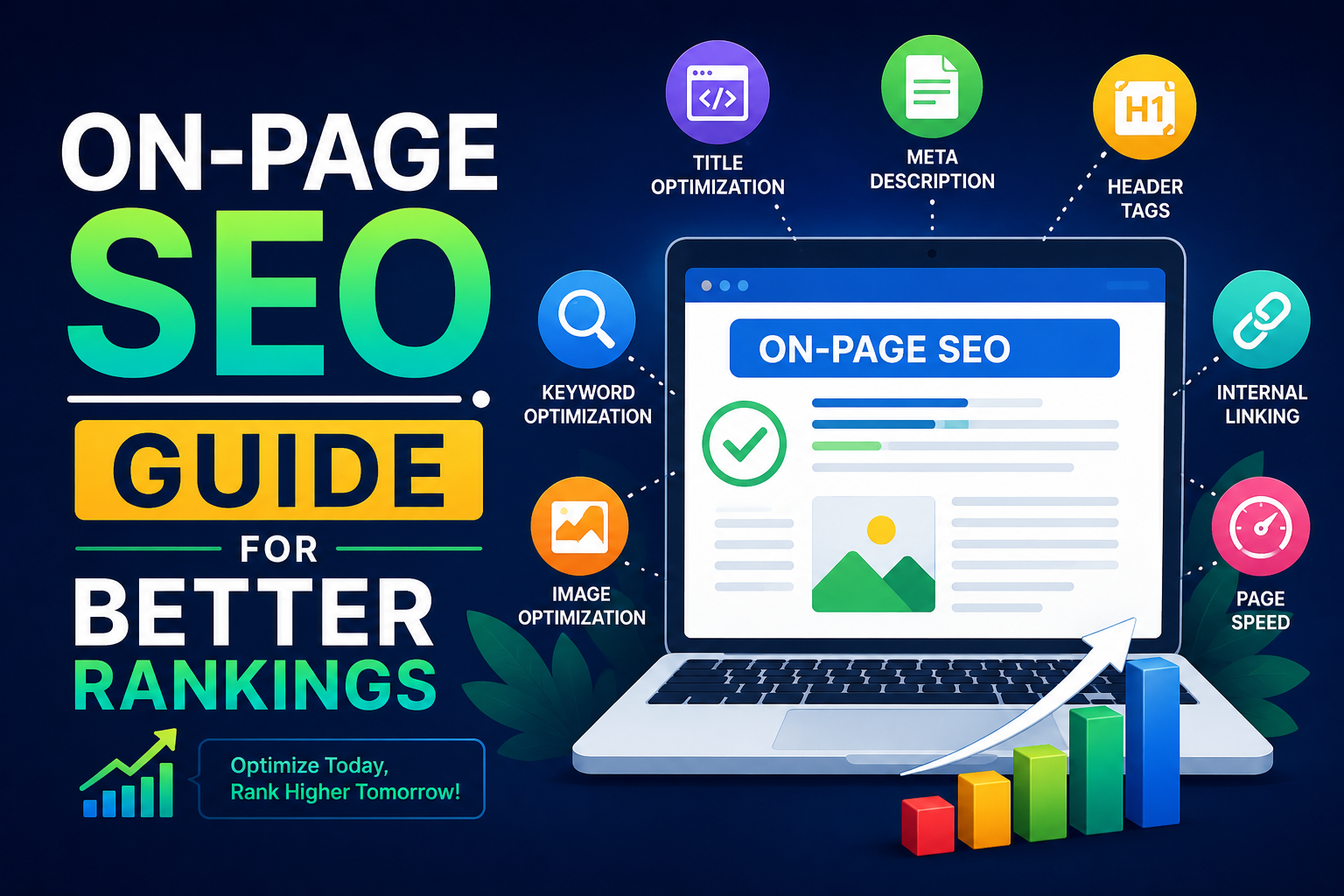
What Is On Page SEO?
On-Page SEO refers to the process of optimizing individual web pages to improve their rankings on search engines and attract relevant organic traffic. It includes optimizing content, titles, headings, URLs, images, internal links, and HTML elements.
Unlike Off-Page SEO, which focuses on backlinks and external signals, On-Page SEO focuses entirely on elements within your website.
The main goal of On-Page SEO is to help search engines understand your content while providing a better experience for users.
Why On Page SEO Is Important
Many website owners focus only on backlinks and ignore On-Page SEO. However, even the best backlinks cannot fully compensate for poorly optimized content.
Here are some important reasons why On-Page SEO matters:
1. Improves Search Engine Rankings
Proper optimization helps search engines understand your content and rank it for relevant keywords.
2. Increases Organic Traffic
Higher rankings lead to more clicks and increased organic traffic.
3. Enhances User Experience
A well-structured page improves readability, navigation, and engagement.
4. Improves Conversion Rates
Optimized content encourages users to take action, whether it is purchasing a product, subscribing to a newsletter, or contacting a business.
5. Supports Other SEO Strategies
Good On-Page SEO strengthens the effectiveness of technical SEO and backlink strategies.
Keyword Research for On Page SEO
Keyword research is the foundation of every successful SEO strategy.
Without proper keyword targeting, your content may never reach the right audience.
Types of Keywords
Short-Tail Keywords
These are broad keywords with high search volume.
Example:
- SEO
- Digital Marketing
Long-Tail Keywords
Long-tail keywords are more specific and usually have lower competition.
Example:
- Best On-Page SEO Techniques for Beginners
- How to Optimize Website Content for Google
Buyer Intent Keywords
These keywords indicate that users are ready to take action.
Example:
- Best SEO Tools
- SEO Services Near Me
Best Tools for Keyword Research
Several tools can help you discover profitable keywords.
Popular SEO Tools
- Ahrefs
- SEMrush
- Google Keyword Planner
- Ubersuggest
- Moz Keyword Explorer
- LowFruits
These tools provide insights into search volume, competition, and keyword difficulty.
Title Tag Optimization
The title tag is one of the most important On-Page SEO factors.
It tells both users and search engines what your page is about.
Best Practices for Title Tags
- Include the main keyword naturally
- Keep the title under 60 characters
- Make it engaging and clickable
- Add numbers or power words when possible
Good Example
“10 On-Page SEO Techniques to Improve Google Rankings”
A strong title improves both rankings and click-through rates.
Meta Description Optimization
Meta descriptions are short summaries that appear below the title in search results.
Although meta descriptions are not a direct ranking factor, they strongly influence click-through rates.
Best Practices
- Keep it under 160 characters
- Include the target keyword
- Write persuasive and clear descriptions
- Encourage users to click
Example
“Learn the best On-Page SEO techniques to improve rankings, increase traffic, and optimize your website for search engines.”
URL Structure Optimization
SEO-friendly URLs help search engines and users understand the topic of a page.
Best Practices for URLs
- Keep URLs short
- Use descriptive keywords
- Avoid unnecessary numbers or symbols
- Use hyphens instead of underscores
Good URL Example
example.com/on-page-seo-guide
Bad URL Example
example.com/post?id=12345
Heading Tag Optimization
Headings improve readability and organize content.
Search engines use headings to understand page structure.
Heading Structure
- H1 for the main title
- H2 for major sections
- H3 for subsections
Best Practices
- Use keywords naturally
- Keep headings clear and descriptive
- Maintain proper hierarchy
Well-structured headings improve user experience and SEO.
High-Quality Content Creation
Content is the heart of On-Page SEO.
Google prioritizes content that provides value, solves problems, and satisfies user intent.
Characteristics of High-Quality Content
Originality
Your content should be unique and not copied from other websites.
Relevance
Content must match the search intent of users.
Readability
Use short paragraphs, bullet points, and simple language.
Depth and Detail
Comprehensive content usually performs better in search rankings.
Accuracy
Always provide factual and updated information.
Keyword Placement Strategies
Using keywords correctly helps search engines understand your content.
Important Places for Keywords
- Title tag
- Meta description
- First paragraph
- Headings
- Image alt text
- URL
- Conclusion
However, avoid keyword stuffing because it can negatively affect rankings.
Image Optimization for SEO
Images improve user engagement, but unoptimized images can slow down your website.
Best Practices for Image SEO
Use Descriptive File Names
Example:
- on-page-seo-guide.jpg
Add Alt Text
Alt text helps search engines understand images.
Compress Images
Large images slow down page speed.
Use Modern Formats
WebP images improve loading speed.
Internal Linking Strategy
Internal links connect pages within your website.
They help users navigate your content while also helping search engines crawl your site.
Benefits of Internal Linking
- Improves user experience
- Distributes link authority
- Increases page views
- Helps search engines discover content
Use relevant anchor text when linking internally.
External Linking Best Practices
Linking to trustworthy external sources can improve content credibility.
Benefits of External Links
- Enhances trustworthiness
- Provides additional value to readers
- Helps search engines understand context
Avoid linking to low-quality or spam websites.
Mobile Optimization
Mobile optimization is essential because most internet users browse on mobile devices.
Google also uses mobile-first indexing.
Mobile SEO Best Practices
- Use responsive design
- Optimize font size
- Improve page speed
- Avoid intrusive popups
A mobile-friendly website improves rankings and user experience.
Page Speed Optimization
Website speed is a confirmed Google ranking factor.
Slow websites lead to higher bounce rates and poor user experience.
Ways to Improve Page Speed
- Use caching plugins
- Compress images
- Minify CSS and JavaScript
- Use a CDN
- Choose fast hosting
Fast websites provide better engagement and higher conversions.
User Experience and Core Web Vitals
Google values websites that provide excellent user experience.
Core Web Vitals measure:
- Loading speed
- Interactivity
- Visual stability
Improving these metrics can positively impact rankings.
Schema Markup and Structured Data
Schema markup helps search engines better understand your content.
It can also improve search visibility with rich snippets.
Types of Schema
- Article schema
- Product schema
- FAQ schema
- Review schema
Structured data can increase click-through rates and improve visibility.
Common On Page SEO Mistakes
Many website owners make SEO mistakes that hurt rankings. Advanced On Page SEO
1. Keyword Stuffing
Overusing keywords makes content unnatural. On Page SEO Guide, On Page SEO Techniques, Best On Page SEO Tips, On Page SEO for Beginners, Website On Page Optimization, On Page SEO Checklist, Technical and On Page SEO, Complete On Page SEO Strategy
2. Duplicate Content
Copied content reduces SEO performance.
3. Poor Content Structure
Large blocks of text reduce readability.
4. Missing Meta Tags
Ignoring titles and descriptions hurts optimization.
5. Slow Website Speed
Slow websites negatively affect user experience.
6. Broken Links
Broken links frustrate users and search engines.
Best Tools for On Page SEO
SEO Plugins
- Rank Math
- Yoast SEO
- All in One SEO
Content Optimization Tools
- Surfer SEO
- Frase
- Grammarly
Performance Tools
- Google PageSpeed Insights
- GTmetrix
- Lighthouse
Analytics Tools
- Google Analytics
- Google Search Console
These tools help monitor and improve website performance.
Future of On Page SEO
SEO continues to evolve as Google improves its algorithms.
Artificial intelligence, voice search, and user experience will play larger roles in future SEO strategies.
Websites that focus on high-quality content and user satisfaction will continue to perform well. SEO Growth Strategy
Conclusion
On-Page SEO is one of the most important aspects of digital marketing and search engine optimization. Without proper on-page optimization, even great websites may struggle to rank on Google.
By focusing on keyword research, high-quality content, title optimization, internal linking, mobile responsiveness, and user experience, you can significantly improve your website’s rankings and organic traffic.
SEO is not a one-time process. It requires continuous monitoring, updating, and improvement. As search engine algorithms evolve, staying updated with the latest SEO practices is essential.
If you consistently apply effective On-Page SEO strategies, your website can achieve higher rankings, attract more visitors, and generate long-term online success.