
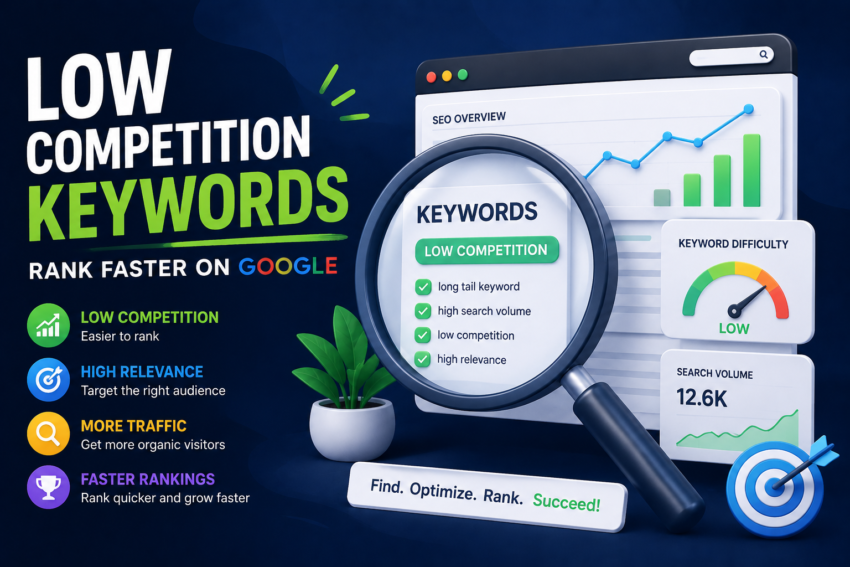
In the world of search engine optimization, keywords play a critical role in determining whether a website succeeds or fails. Every day, millions of websites compete for visibility on Google, making it increasingly difficult for new websites to rank for highly competitive keywords. This is where low competition keywords become extremely valuable.
Low competition keywords are one of the most effective ways for beginners, bloggers, affiliate marketers, and small businesses to gain organic traffic quickly. Instead of competing with massive authority websites for highly searched terms, you can target easier keywords that still attract valuable traffic.
In this article, we will discuss what low competition keywords are, why they matter, how to find them, and the best strategies to rank successfully using them.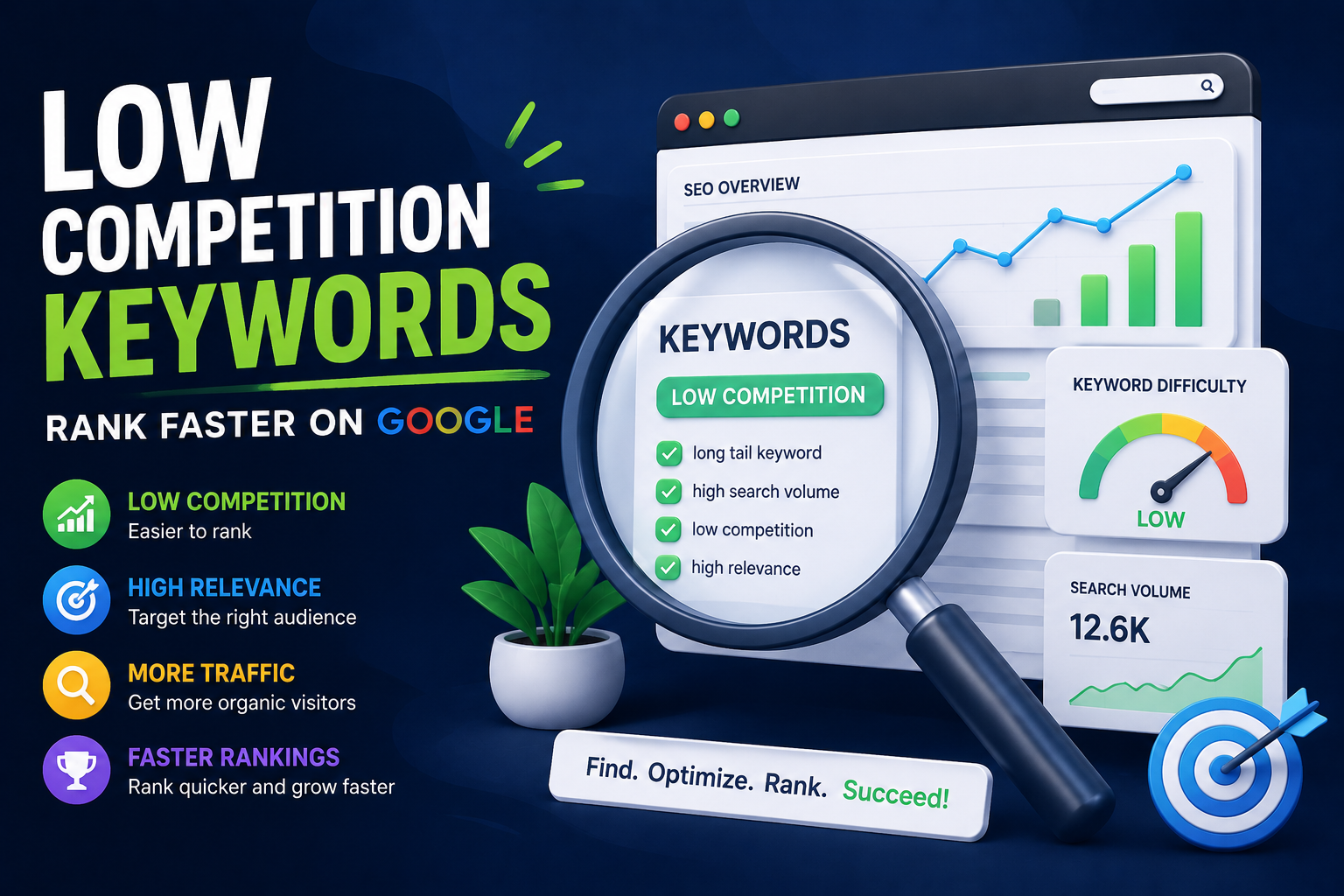
What Are Low Competition Keywords?
Low competition keywords are search terms that have relatively low SEO difficulty compared to highly competitive keywords. These keywords are easier to rank for because fewer strong websites are targeting them.
For example, ranking for a broad keyword like “SEO” is extremely difficult because major websites dominate the search results. However, a keyword such as “best SEO tips for beginner bloggers” is more specific and less competitive.
Low competition keywords often include:
- Long-tail keywords
- Specific search phrases
- Question-based queries
- Localized search terms
- Niche-focused keywords
These keywords may have lower search volume, but they usually provide better ranking opportunities and higher conversion rates.
Why Low Competition Keywords Are Important
Many new website owners fail because they target overly competitive keywords from the beginning.
Low competition keywords offer several major advantages.
1. Faster Rankings
It is much easier to rank for keywords with low competition. New websites can often appear on the first page of Google much faster.
2. Better Conversion Rates
Low competition keywords are usually more specific, meaning users have clearer intent.
For example:
- “Shoes” is broad
- “Best running shoes for flat feet” has strong buying intent
Specific keywords attract users who are ready to take action.
3. Lower SEO Costs
Businesses running paid advertising campaigns also benefit because low competition keywords usually cost less.
4. Higher Topical Authority
Targeting multiple low competition keywords within a niche helps build authority over time.
Types of Low Competition Keywords
Understanding the different types of keywords can help improve your SEO strategy.
Long-Tail Keywords
Long-tail keywords contain multiple words and are highly specific.
Examples:
- Best budget gaming laptop for students
- How to optimize WordPress speed
Long-tail keywords often have lower competition and better conversion rates.
Question Keywords
Many users search using questions.
Examples:
- How does SEO work?
- What is technical SEO?
These keywords are excellent for blog content and featured snippets.
Local Keywords
Local keywords target users in a specific geographic area.
Examples:
- SEO agency in New York
- Best coffee shop in London
Local SEO keywords often have lower competition.
Product-Specific Keywords
These keywords focus on individual products or services.
Examples:
- iPhone 15 Pro review
- Best wireless earbuds under $100
Product-focused keywords are ideal for affiliate marketing.
How to Find Low Competition Keywords
Finding profitable low competition keywords requires proper research and analysis.
1. Use Keyword Research Tools
SEO tools help identify keyword difficulty, search volume, and ranking opportunities.
Best Keyword Research Tools
- Ahrefs
- SEMrush
- Ubersuggest
- LowFruits
- Google Keyword Planner
- KWFinder
- Moz Keyword Explorer
These tools allow you to discover easier keywords with ranking potential.
2. Analyze Search Intent
Search intent refers to the reason behind a user’s search.
There are four main types of search intent:
Informational Intent
Users want information.
Example:
- What is On-Page SEO?
Navigational Intent
Users are searching for a specific website.
Example:
- Facebook login
Transactional Intent
Users want to make a purchase.
Example:
- Buy gaming laptop online
Commercial Intent
Users are comparing products before purchasing.
Example:
- Best DSLR camera for beginners
Commercial and transactional keywords usually convert better.
3. Use Google Autocomplete
Google’s autocomplete feature is one of the easiest ways to discover low competition keyword ideas.
Simply type a keyword into Google and review the suggestions.
These suggestions are based on real user searches.
4. Check “People Also Ask” Questions
Google’s “People Also Ask” section provides additional keyword ideas and content opportunities.
These questions often represent low competition informational searches.
5. Analyze Competitor Keywords
Studying competitor websites can reveal hidden keyword opportunities.
Look for:
- Keywords with low authority competitors
- Pages with weak content
- Search terms with low backlink requirements
If smaller websites rank on page one, the keyword may be easier to target.
How to Evaluate Keyword Difficulty
Not every keyword with low search volume is easy to rank for.
You should evaluate several factors.
Domain Authority of Competitors
If major websites dominate the results, ranking will be difficult.
Content Quality
Weak content on page one creates opportunities.
Backlink Profiles
Keywords with fewer backlinks are often easier to rank.
Search Volume
A balance between low competition and decent traffic is ideal.
Content Strategy for Low Competition Keywords
Finding keywords is only the first step. High-quality content is still essential.
Create Comprehensive Content
Google rewards detailed and useful content.
Cover topics thoroughly while maintaining readability.
Focus on User Intent
Your content should directly answer the user’s query.
Use Proper Heading Structure
Organize content with H1, H2, and H3 headings.
Add Images and Visuals
Visual content improves engagement and readability.
Optimize for Featured Snippets
Use:
- Bullet points
- Numbered lists
- Tables
- Short definitions
These formats increase the chance of earning featured snippets.
On-Page SEO for Low Competition Keywords
Even low competition keywords require proper optimization.
Include Keywords Naturally
Place keywords in:
- Title
- Meta description
- URL
- Headings
- First paragraph
Avoid keyword stuffing.
Optimize Internal Linking
Link related pages together to improve topical relevance.
Improve Page Speed
Fast websites rank better and improve user experience.
Mobile Optimization
Ensure your website is fully responsive.
Common Mistakes When Targeting Low Competition Keywords
Many beginners make SEO mistakes that prevent rankings.
Targeting Irrelevant Keywords
Always choose keywords related to your niche.
Ignoring Search Intent
Content that does not match user intent will struggle to rank.
Writing Thin Content
Low-quality articles rarely succeed.
Overusing Keywords
Keyword stuffing harms readability and SEO.
Ignoring Content Updates
Old content should be refreshed regularly.
Best Niches for Low Competition Keywords
Some niches provide excellent opportunities for beginners.
Affiliate Marketing
Product reviews and comparisons often contain low competition opportunities.
Local Business SEO
Small businesses can rank for location-specific keywords.
Blogging
Informational blog content performs well with long-tail keywords.
SaaS and Technology
Software tutorials and tool reviews often have lower competition.
Health and Fitness
Niche fitness topics can attract targeted traffic.
Tools to Track Keyword Rankings
Tracking rankings helps measure SEO performance.
Popular Rank Tracking Tools
- Ahrefs
- SEMrush
- SERanking
- Google Search Console
- AccuRanker
Monitoring rankings allows you to identify content improvements.
Future of Low Competition Keywords
As competition grows online, low competition keywords will become even more important.
Google increasingly focuses on user intent, content quality, and topical relevance.
Websites that create useful, focused, and well-optimized content around specific search queries will continue to succeed.
Artificial intelligence and voice search are also increasing demand for conversational and long-tail keyword phrases.
Conclusion
Low competition keywords are one of the most powerful SEO strategies for beginners and growing websites. Instead of competing against massive authority sites for broad keywords, targeting specific low competition keywords allows websites to rank faster and attract highly targeted traffic.
Success with low competition keywords requires proper keyword research, high-quality content, strong on-page SEO, and a focus on user intent.
Although these keywords may have lower search volume individually, targeting many low competition keywords together can generate significant organic traffic over time.
If you consistently create valuable content around easy-to-rank keywords, your website can grow steadily and achieve long-term SEO success.